Massage Therapy at Infinite Healing
Massage Therapy is a proven drug-free approach to pain management and rehabilitation. Registered Massage Therapists (RMT’s) are effective in treating and providing relief for a wide range of conditions such as muscle or joint strain; sprains; low back pain; neck pain; tendonitis; arthritis; fibromyalgia; bursitis; sciatica; TMJ dysfunction; torticollis; frozen shoulder; carpal tunnel syndrome; constipation; repetitive strain injuries; migraines and headaches.
At Infinite Healing, our RMT’s are dedicated health care professionals who are committed to restoring pain-free function of the body and optimizing patients physical and mental health. Our staff is trained to accurately assess and treat patients using various techniques such as Swedish Massage; Manual Therapy; Thermal Palms Massage Therapy; Joint Mobilization; Trigger-point Therapy; Myofascial Release Therapy; Deep Tissue Therapy and Scar Tissue Reduction. Our practitioners also provide rehabilitative exercise such as stretching, strengthening, postural exercises and patient education.
Registered Massage Therapy is recognized in Ontario as a Regulated Health Profession and is protected for the public by the Ontario Massage Therapist’s Association. As a result, Massage Therapy is covered by most extended health care insurance plans in Ontario.
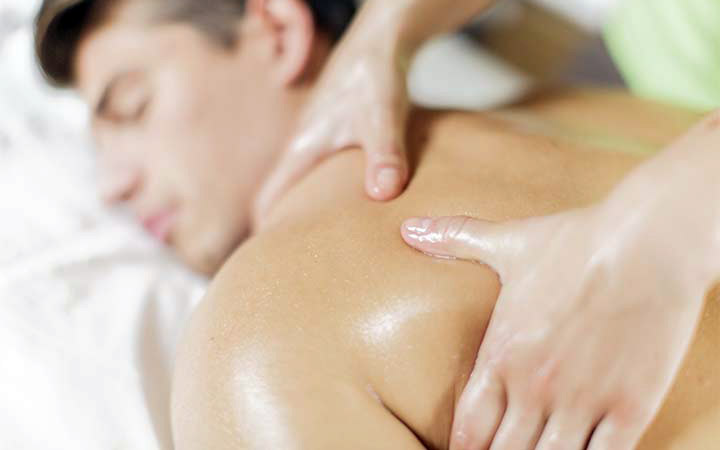
Swedish Massage
This gentle classical treatment involves a technique of long strokes, tapping, percussion, friction, vibration and kneading movements that are used to release muscle tensions, improve blood circulation and alleviate pain. The motion of rubbing and strokes are generally performed in the same direction as the blood flow towards the heart. This assists in increasing the oxygen flow in the blood and releasing toxins from the muscles.
The benefits of Swedish Massage are that it helps to reduce stress (physical and emotional) and can usually be suggested as part of any stress management program. It helps to reduce the build-up of lactic acid, metabolic wastes and uric acid.
Swedish Massage Techniques:
- Petrissage: Kneading movements with the hands, thumbs and/or fingertips
- Effleurage: Gliding strokes with the palms, thumbs and/or fingertips
- Vibration: Oscillatory movements that shake or vibrate your body
- Percussion: Brisk tapping or hacking
- Friction: Circular pressures with the palms of hands, thumbs and/or fingertips
- Bending and stretching
Infinite Healing would be happy to the mail the gift certificates to the recipient at your request.
Our policy is very simple, if you do not show up for your appointment or do not give at least 24 hours’ notice prior to your appointment, you will be required to pay the full cost of the treatment booked.
Note: we understand that circumstances do arise that may be out of someone’s control (sudden illness, emergencies, etc) and the therapists may take exception to the above mentioned policies on rare occasions.
Note: 1/2 hr sessions are not recommended for your initial visit to the clinic. Your therapist may recommend a treatment protocol of shorter treatment times for future sessions. Longer treatments for the initial visit are recommended to review your past and current health and to determine your needs and expectations before we begin treatment. After your treatment your Massage Therapist will consult with you briefly in order to discuss the best plan for your treatment. (This may include home exercises and hydrotherapy, referrals to other professionals and a recommendation for future Massage Therapy treatments.) As your life and physical condition change our recommendations will change to reflect your needs.